For water and wastewater operators in South Africa, compliance is no longer a once-a-month paperwork exercise. The Department of Water and Sanitation (DWS) expects operators to demonstrate, with evidence, that the water they discharge meets the conditions of their licence. As ageing infrastructure, rising volumes and stricter scrutiny converge, effluent monitoring and reliable DWS compliance reporting have become operational priorities — not afterthoughts.
This guide explains what DWS compliance actually involves, why manual sampling alone is increasingly risky, and how real-time, IoT-based effluent monitoring helps operators stay compliant while making better day-to-day decisions.
What DWS compliance actually requires
Wastewater discharge in South Africa is governed primarily by the National Water Act (Act No. 36 of 1998), administered by the DWS. Depending on the nature and volume of the discharge, an operator typically discharges under either a General Authorisation or a site-specific Water Use Licence (WUL). Both set conditions for the quality of the effluent released into the environment or a water resource.
In practice, compliance means:
- Regularly measuring the quality of discharged effluent against the limits set in your General Authorisation or Water Use Licence.
- Keeping accurate, time-stamped records of those measurements.
- Reporting results to the relevant authority on the required schedule.
- Being able to show what happened — and how quickly you responded — when a parameter moves out of range.
For municipal wastewater treatment works, the Green Drop programme adds a further layer of public scrutiny, scoring plants on how well they are run and how reliably they meet discharge standards.
Note: the specific limit values that apply to your site depend on your own licence or authorisation. Always confirm your applicable thresholds with the DWS or your environmental practitioner.
Why manual sampling alone is increasingly risky
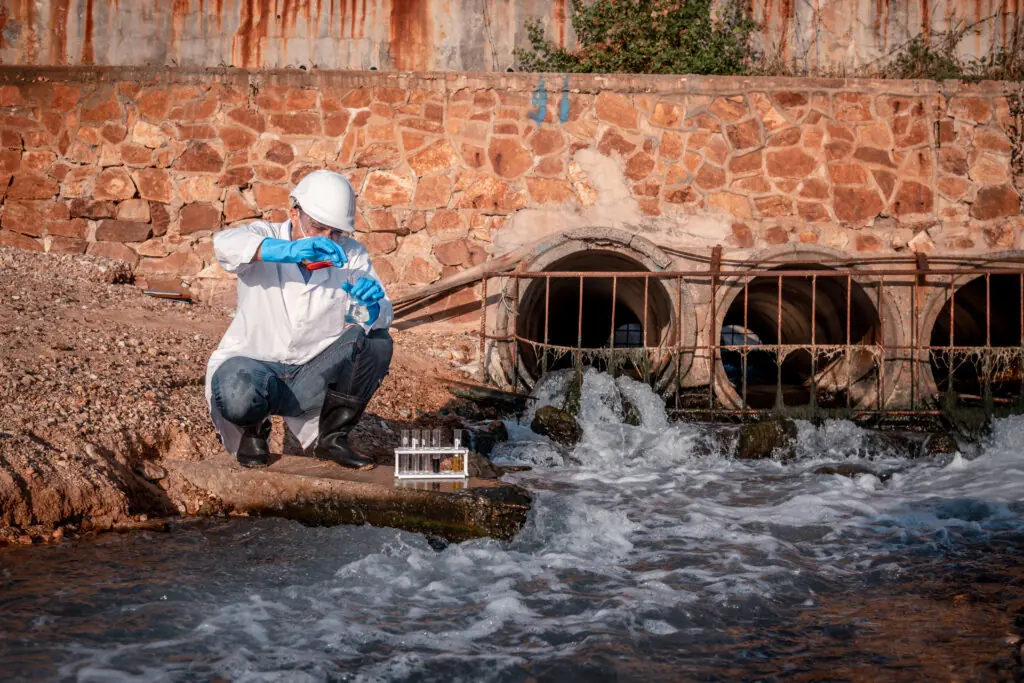
Most plants still rely on periodic grab samples sent to a laboratory. That approach has real limitations:
- Blind spots between samples. A monthly or weekly sample says nothing about what happened in the hours and days in between — which is exactly when an upset condition can push effluent out of compliance.
- Slow feedback. By the time lab results arrive, a non-compliant discharge may already have reached the environment.
- Reporting gaps. Manual records are harder to audit, easier to lose, and time-consuming to compile into the format authorities expect.
- No early warning. Operators only learn about a problem after the fact, rather than being alerted in time to act.
What real-time effluent monitoring measures
Continuous, IoT-based wastewater treatment monitoring uses in-line sensors and remote telemetry to track key water-quality and process parameters around the clock. Depending on the site and the conditions in your licence, this can include:
- pH — acidity or alkalinity of the effluent
- COD / BOD — organic load indicators
- TSS and turbidity — suspended solids and clarity
- Conductivity / TDS — dissolved salts
- Dissolved oxygen — aeration and biological process health
- Ammonia and nutrients — where relevant to the licence
- Flow and discharge volume — how much is released, and when
Because the data is captured continuously and time-stamped automatically, operators gain a complete record rather than a handful of snapshots.
How IoT and SCADA telemetry support compliance reporting
The value of continuous monitoring is not just more data — it is faster, defensible decisions. A well-designed system supports DWS compliance in several ways:
- Automatic, tamper-resistant records. Every reading is logged with a time stamp, building an audit trail that is ready for reporting.
- Real-time alerts. When a parameter approaches or crosses a limit, the right person is notified by SMS or email immediately — in time to act, not after the fact.
- Remote visibility. Using SCADA telemetry, operators can monitor remote pump stations, treatment plants and discharge points from a single dashboard, without driving to every site.
- Report-ready data. Continuous logs can be summarised into the formats authorities expect, cutting the manual effort of compiling compliance reports.
- Evidence of response. When something does go wrong, the data shows what happened and how quickly the team responded — which matters in any compliance conversation.
A practical path to continuous effluent monitoring
Operators do not have to replace their entire plant to get the benefits of real-time monitoring. A staged approach usually works best:
- Start at the discharge point. Instrument the final effluent stream first, where compliance is measured.
- Add process points. Extend monitoring upstream so operators can see problems developing before they reach the discharge.
- Connect remote sites. Bring distributed pump stations and outlying works onto the same telemetry platform.
- Automate reporting and alerts. Turn continuous data into scheduled reports and exception-based notifications.
This is the kind of end-to-end, sensor-to-cloud monitoring addanode builds for South African utilities, municipalities and industrial sites — designed for local field conditions and the realities of DWS compliance. You can read more on our water and wastewater treatment monitoring page.
Frequently asked questions
Does effluent monitoring replace laboratory testing?
No. Continuous monitoring complements accredited lab analysis. In-line sensors give you constant visibility and early warning between lab samples, while the laboratory remains the reference for certain regulated parameters.
Can a monitoring system help with DWS reporting specifically?
Yes. Because readings are logged continuously and time-stamped, the data can be compiled into the records and summaries authorities expect — and it provides evidence of how quickly the team responded to any exceedance.
Will it work at remote or unmanned sites?
Yes. Remote telemetry is designed exactly for sites that are difficult to visit often, sending data and alerts back to a central dashboard over cellular or other connectivity.
Take control of effluent monitoring and DWS compliance
Real-time effluent monitoring turns compliance from a reactive, paperwork-heavy burden into a continuous, defensible process — and gives operators the early warning they need to protect both the environment and their licence. To discuss a monitoring approach for your site, contact the addanode team.
Explore related solutions
See how this topic connects to addanode Industrial IoT, monitoring, and field operations solutions.